
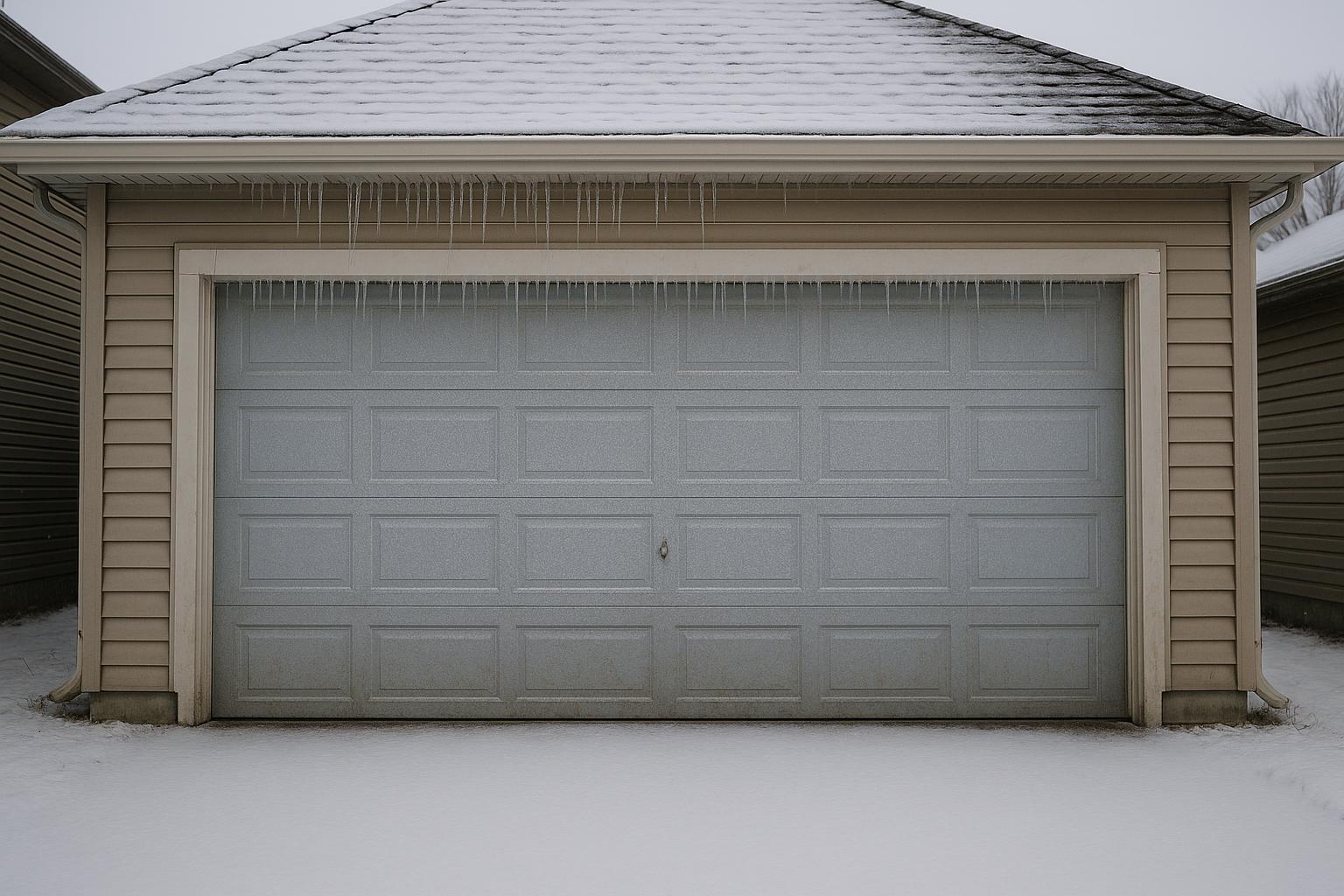
Winter and Your Garage Door: A Tough Combination
If you've lived in Zion for even one winter, you know how brutal the cold can get. Temperatures regularly dip below freezing between December and March, and that kind of weather takes a serious toll on your garage door. When you're running late for work on a frigid morning and your garage door refuses to budge, it's more than an inconvenience — it can throw off your entire day.
At Zion Garage Door, we see a spike in service calls every winter from homeowners dealing with doors that won't open, move sluggishly, or stop halfway up. The good news is that most winter garage door problems are preventable. Here's what causes them and what you can do to keep your door working reliably all season long.
Common Reasons Your Garage Door Won't Open in Cold Weather
1. The Weatherstripping Has Frozen to the Ground
This is the most common winter garage door issue we encounter in the Lake County area. The rubber weatherstripping along the bottom of your garage door is designed to seal out drafts, rain, and pests. But when temperatures drop and moisture collects beneath the door, that seal can literally freeze to the concrete floor of your garage or driveway.
When you hit the opener button, the motor strains against the frozen seal. In some cases, the door won't move at all. In others, the opener may disengage or the weatherstripping can tear away from the door entirely.
What to do: Never force the door open. Instead, try these steps:
- Use a heat gun or hair dryer to gently warm the bottom edge of the door where it meets the ground.
- Carefully tap along the seal with a flat-edge tool to break the ice bond without damaging the rubber.
- Once freed, apply a silicone-based lubricant or cooking spray along the bottom seal to help prevent re-freezing.
2. Metal Components Have Contracted
Garage doors rely on metal parts — tracks, springs, hinges, and rollers. When the temperature drops significantly, metal contracts. This contraction can cause tracks to become slightly misaligned, springs to lose tension, and hinges to stiffen. The result is a door that moves slowly, unevenly, or not at all.
What to do: Lubricating all moving metal parts with a garage door-specific lubricant before winter arrives can help reduce the effects of contraction. If your door is visibly off-track or struggling to move, it's best to call a professional rather than attempt to adjust the tracks or springs yourself.
3. Thickened Lubricant on Tracks and Rollers
Standard grease and some lubricants thicken in cold weather, creating resistance on the tracks and rollers. Instead of gliding smoothly, the door drags and strains the opener motor.
What to do: Use a lithium-based or silicone-based lubricant, which performs better in low temperatures than standard grease. Apply it to the tracks, rollers, hinges, and spring coils. Wipe away any old, gummy lubricant before applying a fresh coat.
4. The Garage Door Opener Is Struggling
Your garage door opener's motor has to work harder in cold weather. Between stiff components, contracted metal, and frozen seals, the load on the motor increases. Older or underpowered openers may not be up to the task, especially if the door is heavy or hasn't been maintained recently.
Some openers also have a built-in safety feature that prevents them from operating if they detect too much resistance, which can be triggered by winter conditions.
What to do: If your opener is more than 10-15 years old and struggles every winter, it may be time for an upgrade. Newer models are more powerful, more energy-efficient, and come with features like battery backup — which is especially useful during winter power outages.
5. Broken or Weakened Springs
Garage door springs are under constant tension, and cold weather makes them more brittle. A spring that was already nearing the end of its lifespan is much more likely to snap during a cold snap. If you hear a loud bang from your garage or your door suddenly feels impossibly heavy, a broken spring is likely the culprit.
What to do: Spring replacement is not a DIY job. The tension involved is dangerous, and improper handling can cause serious injury. Call a professional immediately if you suspect a broken spring.
How to Winterize Your Garage Door
Prevention is always easier and cheaper than emergency repairs. Here's a simple winterization checklist that Zion homeowners can follow before the cold sets in:
- Inspect the weatherstripping. Look for cracks, gaps, or sections that have pulled away from the door. Replace damaged weatherstripping before the first freeze.
- Lubricate all moving parts. Use a cold-weather lubricant on springs, hinges, rollers, and tracks.
- Test the balance. Disconnect the opener and manually lift the door halfway. If it doesn't stay in place, the springs may need adjustment.
- Check the opener. Listen for unusual sounds and make sure the motor runs smoothly. Replace the batteries in your remote and wall-mounted keypad.
- Clear the area around the door. Remove leaves, debris, and standing water from the base of the door to reduce the chance of freezing.
- Schedule a professional tune-up. A trained technician can spot issues you might miss and make adjustments that keep your door running safely through winter.
When to Call a Professional
Some winter garage door problems are easy to handle on your own — a frozen seal or a dry track, for example. But other issues require professional attention. You should call a garage door technician if:
- Your door is visibly off-track or crooked.
- A spring has broken or appears stretched.
- The opener motor runs but the door doesn't move.
- You notice frayed cables or damaged hardware.
- The door is too heavy to lift manually.
Attempting to fix these problems without the right tools and training can lead to further damage or personal injury.
Stay Ahead of the Cold
Winter garage door problems are frustrating, but they're largely preventable with a little preparation. Taking 30 minutes to inspect and lubricate your door before the season's first hard freeze can save you from being stranded in your driveway on the coldest morning of the year.
If your garage door is already giving you trouble this winter — or if you want to get ahead of the problem with a professional maintenance visit — Zion Garage Door is here to help. We serve homeowners throughout Zion, Waukegan, Beach Park, Winthrop Harbor, North Chicago, and Gurnee with fast, reliable service when you need it most.