
Your Garage Door Springs Are Doing More Work Than You Think
Every time you open or close your garage door, the springs are doing the heavy lifting — literally. A standard two-car garage door can weigh between 150 and 250 pounds, and the springs are responsible for counterbalancing all of that weight. Without properly functioning springs, your garage door opener would burn out almost immediately, and manually lifting the door would be nearly impossible.
For homeowners in Zion and the surrounding Lake County area, understanding when to replace your garage door springs can save you from unexpected breakdowns, costly emergency repairs, and even dangerous situations. Here's everything you need to know about spring lifespan, warning signs, and replacement timing.
How Long Do Garage Door Springs Last?
The lifespan of a garage door spring is measured in cycles. One cycle equals one full open and one full close of the door. Most standard torsion springs are rated for approximately 10,000 cycles, which translates to roughly 7 to 10 years of typical residential use.
However, several factors can shorten or extend that lifespan:
- Frequency of use: If you use your garage door four or more times a day (which is common for busy families), your springs will wear out faster than average.
- Climate and weather: Here in Zion, our cold winters put extra stress on metal components. Repeated freezing and thawing can cause metal fatigue, leading springs to weaken and eventually snap.
- Maintenance habits: Springs that are regularly lubricated and inspected tend to last longer than neglected ones.
- Spring quality: Higher-quality, high-cycle springs (rated for 20,000 or even 30,000 cycles) are available and can last significantly longer, though they cost more upfront.
Torsion Springs vs. Extension Springs: Does It Matter?
There are two main types of garage door springs, and the type you have affects both lifespan and safety considerations.
Torsion Springs
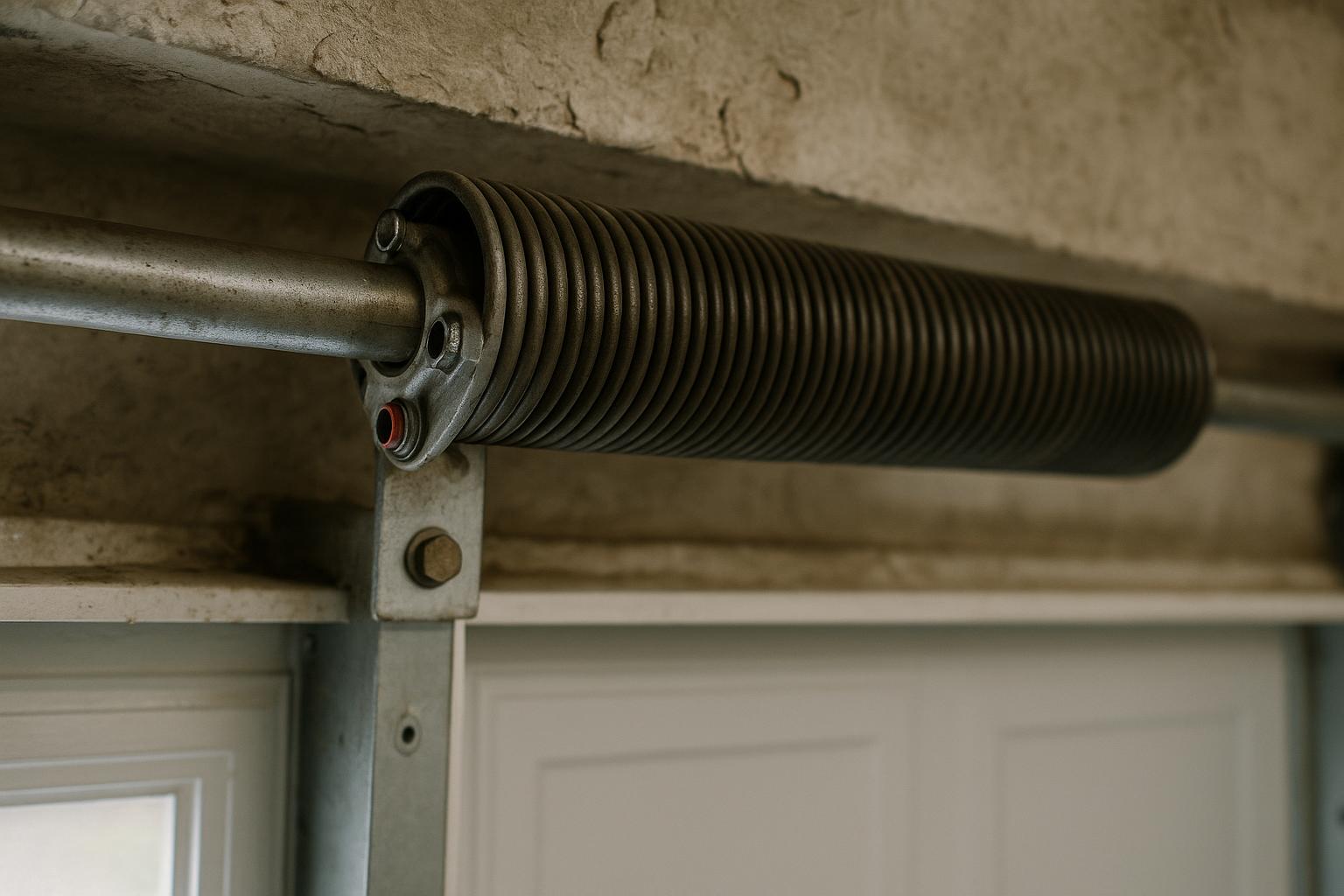
These are mounted on a metal shaft directly above the garage door opening. They twist and unwind to raise and lower the door. Torsion springs are the more common and preferred option for modern garage doors because they provide smoother operation, better balance, and generally last longer.
Extension Springs
These run along the horizontal tracks on either side of the door and stretch to store energy. Extension springs are typically found on older garage door systems. They tend to wear out faster and can be more dangerous when they break because they can fly off if safety cables aren't installed.
If your home in Zion still has extension springs, it may be worth upgrading to a torsion spring system during your next replacement. The investment pays off in durability and safety.
Warning Signs Your Garage Door Springs Need Replacement
Springs rarely fail without giving you some advance warning. Here are the signs every homeowner should watch for:
- The door feels heavier than usual: Try lifting your garage door manually after disconnecting the opener. If it feels significantly heavier or won't stay open on its own at about the halfway point, the springs are losing tension.
- Visible gaps in the spring coils: A healthy torsion spring has tightly wound coils. If you notice a visible gap or separation in the coils, the spring is stretched out and nearing failure.
- The door opens unevenly: If one side of the door rises faster than the other, one spring may be weaker or already broken (in two-spring systems).
- Loud bang from the garage: If you heard a loud bang that sounded like a firecracker coming from your garage, a spring likely snapped. This is one of the most common ways homeowners discover a broken spring.
- The opener is straining: If your garage door opener is working harder, making unusual noises, or struggling to lift the door, worn springs could be forcing it to compensate.
- The door won't open at all: In many cases, a broken spring means the door simply won't budge, even with the opener engaged.
Can You Replace Garage Door Springs Yourself?
We understand the DIY spirit — but garage door spring replacement is one job we strongly recommend leaving to professionals. Here's why:
- Extreme tension: Garage door springs are under tremendous force. A torsion spring that snaps or unwinds unexpectedly can cause severe injuries or even death.
- Specialized tools required: Proper replacement requires winding bars, clamps, and precise knowledge of spring sizing. Using the wrong tools or the wrong spring size creates a dangerous situation.
- Warranty concerns: Many garage door and opener warranties require professional installation and service. A DIY spring job could void your coverage.
At Zion Garage Door, we handle spring replacements every week for homeowners across Zion, Waukegan, Beach Park, Winthrop Harbor, North Chicago, and Gurnee. Our technicians arrive with the right springs for your specific door and get the job done safely, usually in under an hour.
Should You Replace Both Springs at Once?
If your garage door has two torsion springs and only one has broken, you might wonder if you can get away with replacing just the one. Technically, yes — but we almost always recommend replacing both at the same time.
Here's the reasoning: both springs were installed at the same time and have endured the same number of cycles. If one has failed, the other is likely close behind. Replacing both springs together means:
- You avoid a second service call in a few weeks or months
- The door stays properly balanced with evenly matched springs
- You save money on labor since the technician is already there
How to Extend the Life of Your Garage Door Springs
While springs will eventually wear out no matter what, a little preventive care goes a long way. Here are some tips for Zion homeowners who want to get the most out of their springs:
- Lubricate your springs twice a year: Use a silicone-based or white lithium grease spray on the springs, hinges, and rollers. This reduces friction and prevents rust — especially important given our Lake County winters.
- Schedule annual maintenance: A professional inspection can catch early signs of wear before a spring snaps at the worst possible time.
- Keep the tracks clean and aligned: Dirty or misaligned tracks force the springs to work harder, accelerating wear.
- Consider high-cycle springs: When it's time for replacement, ask about springs rated for 20,000 or 25,000 cycles. They cost a bit more but can nearly double or triple your spring lifespan.
Don't Wait for a Broken Spring to Take Action
A broken garage door spring is more than an inconvenience — it can leave your car trapped in the garage, compromise your home's security, and create a safety hazard for your family. The best approach is proactive: know how old your springs are, watch for warning signs, and schedule maintenance before problems escalate.
If you're in Zion or anywhere in the surrounding Lake County area and your garage door springs are showing signs of wear, don't wait for them to snap. Contact Zion Garage Door today to schedule an inspection or replacement. We offer fast, affordable service and can usually get to you the same day.